


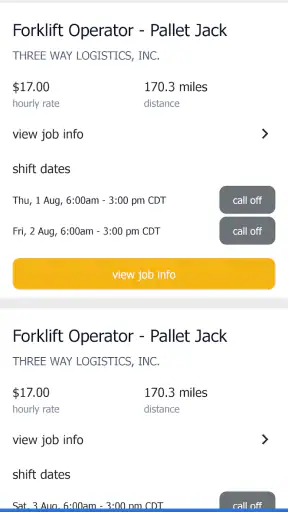
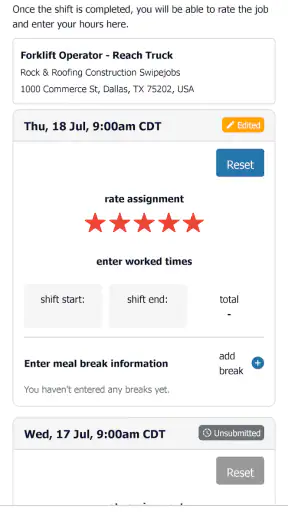
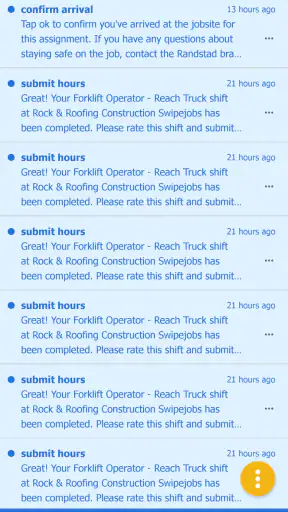
Finding work can become a job in itself. You check several websites, repeat the same details, compare locations, and still wonder whether a temporary position is worth pursuing before the opportunity disappears. I found randstad: jobs for workers most useful when I treated it as a practical starting point rather than a complete replacement for every employment channel. It brings job searching onto the phone, with a particular focus on finding nearby roles and temporary work without making me sit at a computer.
That focus matters. Someone looking for a long-term professional position may want extensive company research, networking tools, portfolio support, and detailed career planning. Someone who needs work soon, wants to see what is available locally, or prefers temporary assignments has a different priority: fewer steps between opening the app and understanding what might be worth applying for. In my experience, this is where the app makes the strongest case for itself.
From scattered job searches to a more usable routine
The app comes from randstad at work and sits in the Business category. It is free to use, has an Everyone age rating, and has built a sizeable audience, with over a million installs and an average rating of 4.5 from around 9.2 thousand ratings. Those figures do not guarantee that every listing will suit every person, but they do suggest that the mobile-first approach is useful to a broad group of workers.
My first recommendation is to approach setup with a clear idea of the work you will actually accept. Think about the distance you can travel, the type of schedule you can manage, whether temporary work is acceptable, and how quickly you need an assignment. If you enter vague preferences, the results can become less helpful because “nearby work” means something different to a student, a parent, a commuter, and someone who can relocate temporarily.
The most valuable early habit is to keep your job search realistic rather than simply broad. A large collection of possible roles can look encouraging, but it also creates extra reading and comparison. I would begin with a narrow search, inspect the available positions carefully, and then widen the criteria only if the first results do not provide enough practical options. This saves more time than opening every possible category at once.
It is also worth preparing the information you regularly need when applying. A phone app can make searching convenient, but typing a work history on a small screen is still slower than reviewing an existing document. I found it easier to think through previous roles, availability, and preferred work before starting the application process. That small preparation turns the app from a browsing tool into part of a repeatable workflow.
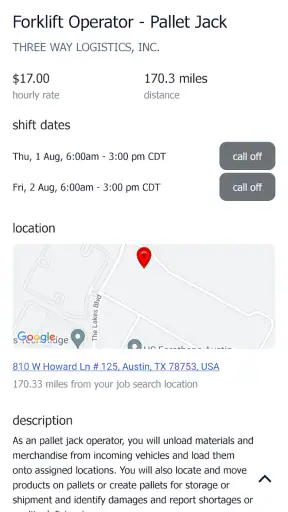
One useful distinction is between discovering a position and deciding to pursue it. The first step can be quick: identify roles that seem close enough, relevant enough, and compatible with your schedule. The second deserves more attention. Temporary work can differ considerably in hours, duration, duties, and travel requirements, so I would not judge a listing only by its title. The app can reduce the search effort, but the final decision still depends on reading each opportunity with care.
A realistic everyday use case
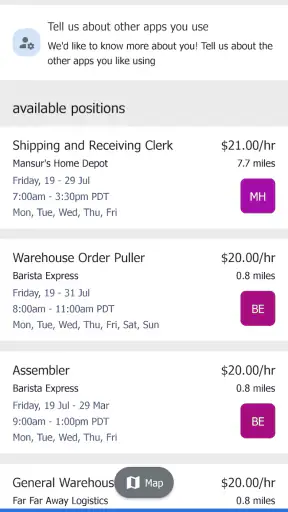
Imagine someone whose regular hours have been reduced and who wants additional work without committing to a full career change. Instead of searching from a desktop after a long day, they can open the app while commuting or during a break, look for nearby temporary opportunities, and separate realistic options from those that require too much travel. The benefit is not just convenience. It is the ability to keep the search active in small moments that would otherwise be lost.
That scenario also shows the app’s main trade-off. A phone makes job discovery more immediate, but it encourages quick decisions. I would use the short, convenient sessions for finding possibilities, then slow down before applying. This two-stage approach preserves the time-saving advantage without treating a compact listing view as enough information for an important work decision.
Where it fits among ordinary job-search alternatives
The usual alternative is a general job board viewed through a browser or a collection of employer websites. Those options may be better when I want to research a specific company, compare a large range of permanent careers, or investigate specialist positions. A general platform can also provide broader context, especially for professional roles that depend on a portfolio, industry reputation, or networking.
randstad: jobs for workers feels more targeted when the immediate question is, “What work can I find near me, and can I start with a temporary arrangement?” That narrower purpose is a strength, not a weakness, provided it matches your situation. I would choose a wider job platform for a long, exploratory career search and use this app when speed, location, and practical availability matter more than building a complete professional profile.
Another alternative is contacting staffing agencies directly or visiting an office. A mobile app removes much of the travel and waiting involved in that approach, letting me begin from wherever I am. However, direct contact can still be preferable when my circumstances are complicated, when I need to explain unusual availability, or when I have questions that a listing cannot answer clearly. The app improves access to opportunities; it does not eliminate the value of human clarification.
Small workflow choices that make it more useful
I would keep the search process organized around three groups: positions worth applying for, positions that need more checking, and positions that do not fit. Without that separation, it is easy to revisit the same listing repeatedly or forget why an opportunity looked unsuitable. This is a simple habit, but it addresses one of the hidden costs of mobile job hunting: convenience can create a long trail of half-considered options.
A second useful approach is to search at different times rather than assuming one visit will show everything you need. Temporary work can be time-sensitive, and the most useful opportunity may not be visible during a single short session. I would make the app part of a regular routine, especially if I am actively looking, while avoiding constant checking that turns the search into a source of stress.
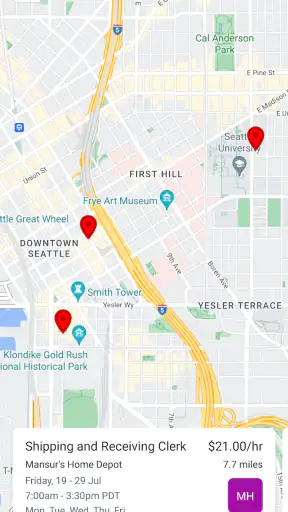
Location deserves special attention. “Near me” is not the same as “easy for me to reach.” A position may look close on a map but still be inconvenient because of transport connections, shift times, or the need to travel before public services begin. Before applying, I would translate the location into a real journey and decide whether the schedule makes that journey practical. This is one of the most important checks the app cannot make on my behalf.
I would also compare temporary roles by the total commitment they create, not only by the length of the assignment. A short position can still require difficult travel, unusual hours, or rapid availability. Conversely, a temporary role may be a sensible bridge while waiting for a permanent position. The app is particularly helpful when I use it to compare these trade-offs rather than simply chase the newest listing.
What the app removes from the process
The biggest friction it removes is the need to be tied to a desk. Searching from a phone makes it easier to check opportunities during spare moments and respond when I am already thinking about work. That matters for people whose schedules are irregular, who share a computer, or who cannot spend long periods completing a traditional desktop search.
It also reduces the separation between location and availability. Instead of beginning with a broad internet search and filtering down through unsuitable results, I can start from the practical question of where I can work. For temporary workers, that can be more useful than reading a large number of attractive but unrealistic vacancies.
The app’s free price lowers the barrier to trying this approach. I can use it as an additional channel without paying for access, which makes sense for someone who is already comparing several ways to find work. The important point is that “free” does not mean the decision is cost-free: time spent applying, travelling, and preparing for a role still needs to be weighed carefully.
Its mobile format may also make job searching feel less intimidating. Opening an app for a short search is psychologically easier than planning a long session on a website, especially when someone is already tired or uncertain about what type of work to pursue. I noticed that the lower effort encouraged more regular checking, which is useful when opportunities change quickly.
Where friction remains
The same compact format that makes the app convenient can limit how much context I absorb at once. A phone screen is not ideal for comparing several roles side by side, examining a detailed work history, or carefully reviewing every condition. I would use the app for discovery and initial action, but I would still take notes or move to a larger screen when comparing several serious options.
There is also a risk of confusing speed with certainty. A quick application is not necessarily a good application, and a nearby role is not automatically a suitable one. Before committing, I would check the duties, expected schedule, duration, and practical journey. If anything feels unclear, I would seek clarification through the appropriate channel rather than relying on assumptions made from a short listing.
People seeking highly specialized or senior positions may find the app less aligned with their needs. Its strongest identity is practical work discovery, especially around local and temporary opportunities. If your search depends on extensive employer research, professional networking, or a carefully presented portfolio, a broader service may deserve more of your attention.
It may also be the wrong choice for someone who wants a single, permanent role and does not want temporary work included in the search experience. In that case, a specialist career platform or direct applications to selected employers could provide a more focused route. I would not install this app simply because it is popular; I would install it because its emphasis matches the way I need to look for work.
Compatibility, trust, and practical expectations
The current version is 8.2.0, and the app supports devices running Android 8.1 or later. That makes it accessible to people who do not own a recent phone, although the experience will naturally depend on the condition and performance of the individual device. Before relying on it during an urgent search, I would make sure the phone is updated enough to run the app comfortably and that I can receive important communication reliably.
The Everyone rating makes it suitable for a general audience, but employment decisions still require adult judgement. Younger users, students, or people new to temporary work should pay particular attention to schedules, travel, responsibilities, and the nature of each role. A simple interface does not make every opportunity simple, and the app should support careful decisions rather than replace them.
I also recommend treating every listing as the beginning of a conversation, not as a promise of a perfect match. The app can bring relevant possibilities together, but suitability depends on details such as availability and personal circumstances. Keeping expectations realistic is part of using it well: its value is in reducing the effort needed to find opportunities, not in guaranteeing an outcome from every search.
My verdict for different kinds of workers
I would recommend this app to someone who wants a convenient way to look for nearby jobs, is open to temporary work, or needs to keep searching while moving through a busy day. It is especially sensible as a second channel alongside direct employer applications or a broader job board. The combination of free access and phone-based searching makes it easy to test without changing your whole routine.
I would be more cautious if I were pursuing a specialized career, comparing permanent positions over several months, or needing detailed support with professional presentation. In those situations, the app may still reveal an opportunity, but it should not be the only place I look. A wider service can provide more context, while direct contact may be better for questions that require a personal answer.
After using it, my overall impression is that the app succeeds by addressing a very ordinary problem: job searching often takes too many separate steps before a person even reaches a realistic opportunity. randstad at work makes that first stage more accessible and more compatible with everyday phone use. The best results come from combining its speed with a disciplined review of each role.
My recommendation is simple: use it when reducing search time and finding practical local or temporary work are your priorities, but slow down before accepting anything. It is not a complete career-planning system, and it does not need to be. As a focused Business app for workers who want to search from their phone, it earns its place when it helps turn scattered spare minutes into a more consistent, informed job-search routine.


